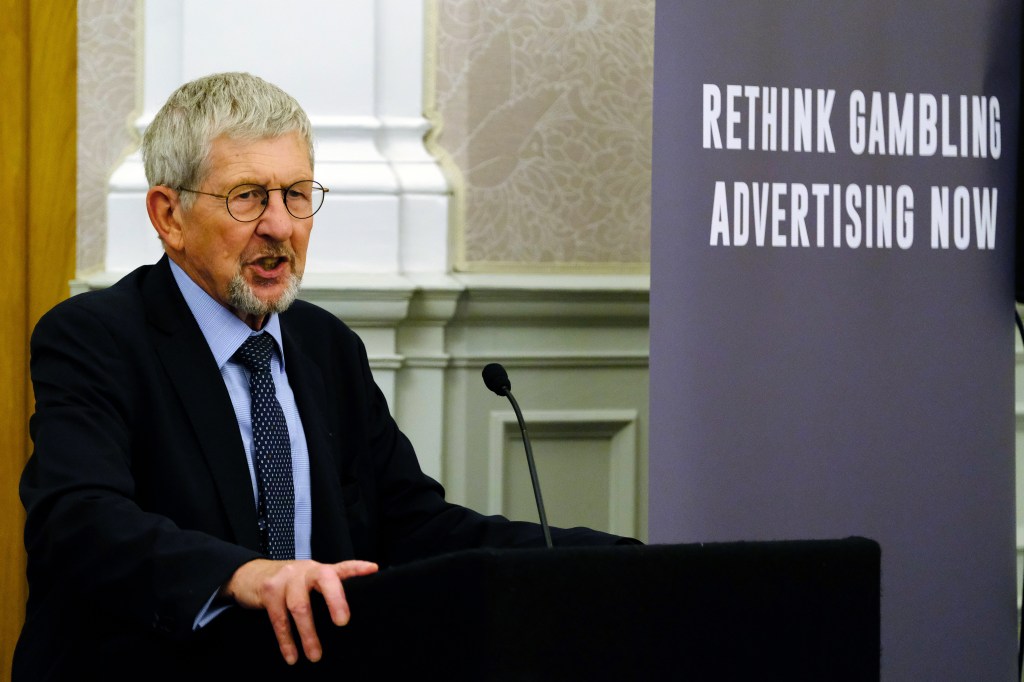
- National Sports Commentator Clive Tyldesley and former England Women’s Footballer Gilly Flaherty join Parliamentarians and over 250 people at Summit in Westminster to call for urgent reform to gambling advertising
- New polling by Survation shows 78% of UK adults believe under 18s shouldn’t be exposed to gambling advertising, with over half supporting a complete ban on gambling advertising, sponsorship and promotion.
Today, Mark Palios, Former Football Association Chief Executive, and Guy Parker, Chief Executive of the Advertising Standards Authority and the Gambling Commission, will be joined by over 250 people including cross-party Parliamentarians, leading sporting figures and charities, in Westminster, to call for bold and significant reforms to gambling advertising.
The Gambling Advertising Reform Summit, organised by Peers for Gambling Reform, will underline the devastating impact the £1.5bn of advertising spend by gambling companies each year.
Alongside the Summit, new polling released today by Survation has shown that:
- 78% of people believe nobody under the age of 18 should be exposed to gambling advertising
- 67% of people believe gambling presents a danger to family life
- 65% of people think the gambling industry cannot be trusted to make gambling safer without government action
- 54% of people believe the Gambling Commission has failed to properly regulate the gambling industry
- 51% of people think that all gambling advertising, promotion and sponsorship should be banned
Background
In 2023, the Department for Digital, Culture, Media and Sport (DCMS) published a white paper that set out the- then government’s plan for the reform of gambling regulation following the review of the Gambling Act 2005. The major omission in the white paper was reform to gambling advertising, where proposals fell significantly short of what was required to deal with the harm the proliferation of gambling advertising has led to.
In a December 2023 report, the Culture, Media and Sport Committee said there was an “urgent need to better understand the effects of gambling advertising on the risk of harm”.
The Labour Party manifesto included a commitment to reduce gambling-related harm. This would involve reforming gambling regulation, strengthening protections, and working with the industry on how to ensure responsible gambling. In August 2024, in response to a parliamentary question on what plans it had to reduce gambling advertising, the government said it would “consider the best available evidence” to inform decisions on how to fulfil its manifesto commitment.
Lord Foster of Bath, Chair of Peers for Gambling Reform Group said
“Reforming gambling advertising was the major omission from the previous Government’s Gambling White Paper. Given the now established link between gambling advertising and gambling harm, Peers for Gambling Reform urge the new Government to urgently rethink the regulation of gambling advertising, and I look forward to discussing this in detail at this important Summit.”
Clive Tyldesley, Broadcaster and Sports Commentator said:
“I am increasingly uncomfortable with the relationship between football and gambling. I stepped down from a position commentating on games for TalkSport because I was required to read live odds during matches, and I just didn’t think I should be promoting betting. I want to encourage people involved in sport to try to learn more about gambling harm and the impact of gambling advertising before recording another commercial or renewing an ambassadorial role.”
Prof Henrietta Bowden-Jones OBE, National Clinical Advisor on Gambling Harms said:
“Over the last decade we have witnessed a proliferation of gambling advertising which has facilitated the normalisation of gambling. I am particularly concerned by the amount of gambling adverts present in football. We must protect future generations from being exposed to gambling ads when watching sport, society must become accountable for the environment lived in by future generations.”
 Peers for Gambling Reform